Neurotypical Communication Protocols (NCP) for Emotional Safety and Predictability

Preamble: Building Your Social Safety Toolkit for Neurotypical Interactions
This document is crafted for individuals who experience the world with a thick dissociation layer, meaning the inner workings of their mind are not always clear, and who navigate social situations with a dominant emotional temperament. If you often feel “blindsided” by unexpected social shifts, find neurotypical communication confusing, or become easily discouraged by social challenges, this guide is for you.
Our goal is to provide you with a Social Safety Toolkit — a set of reliable strategies and clear explanations to help you feel more secure and confident in neurotypical (NT) environments. We will focus on protective scaffolding, emotional safety protocols, and simplified, high-reliability social scripts. This approach aims to reduce the frequency of social “shocks,” prevent discouragement, and build a sense of predictability in your interactions. Think of these protocols as your personal social armor, designed to protect your emotional well-being while navigating the social world.
Module 1: Understanding Neurotypical Social Weather
1.1 The Unspoken Vibes: Navigating the Implicit Context Stack
Neurotypical social interactions are heavily influenced by Unspoken Vibes, a dynamic collection of unstated feelings, expectations, and shared understandings. Unlike clear, direct instructions, these vibes are often assumed to be universally felt and understood. When these vibes are missed, it can feel like a sudden, unexpected change in the social weather, leaving you feeling blindsided.
Understanding the Social Weather System:
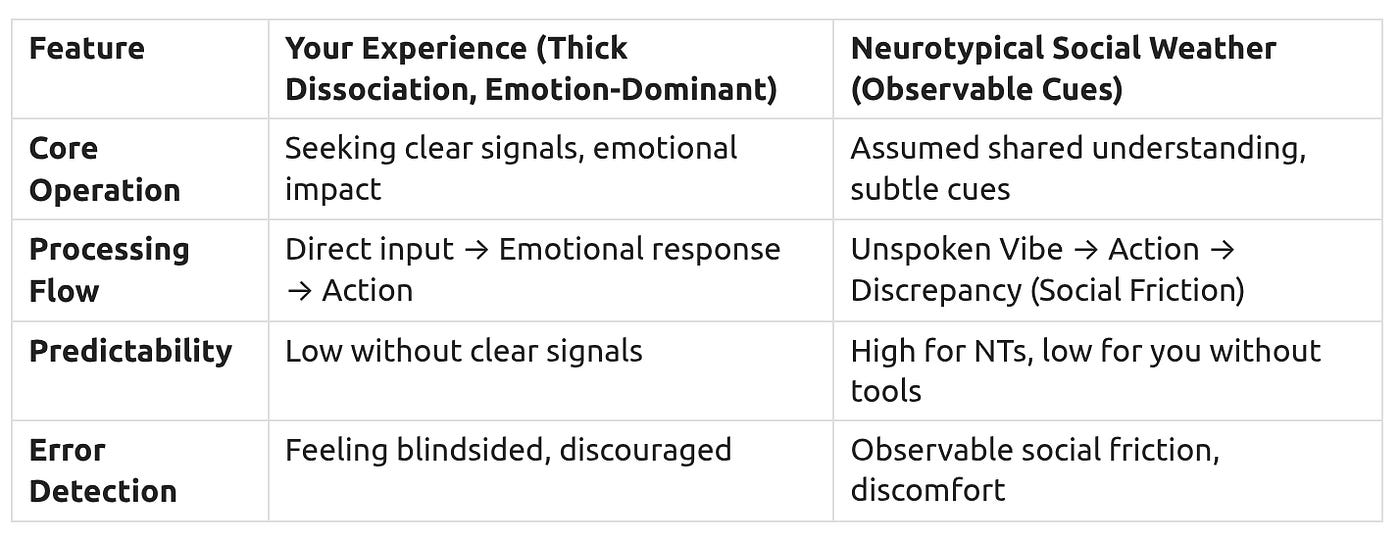
Operational Implication: To avoid feeling blindsided, it’s crucial to learn to identify the external cues that signal these Unspoken Vibes. This allows you to anticipate shifts in the social weather and prepare your responses, much like checking a weather forecast before going outside.
The Five Critical Vibe Layers (External Cues for Identification)
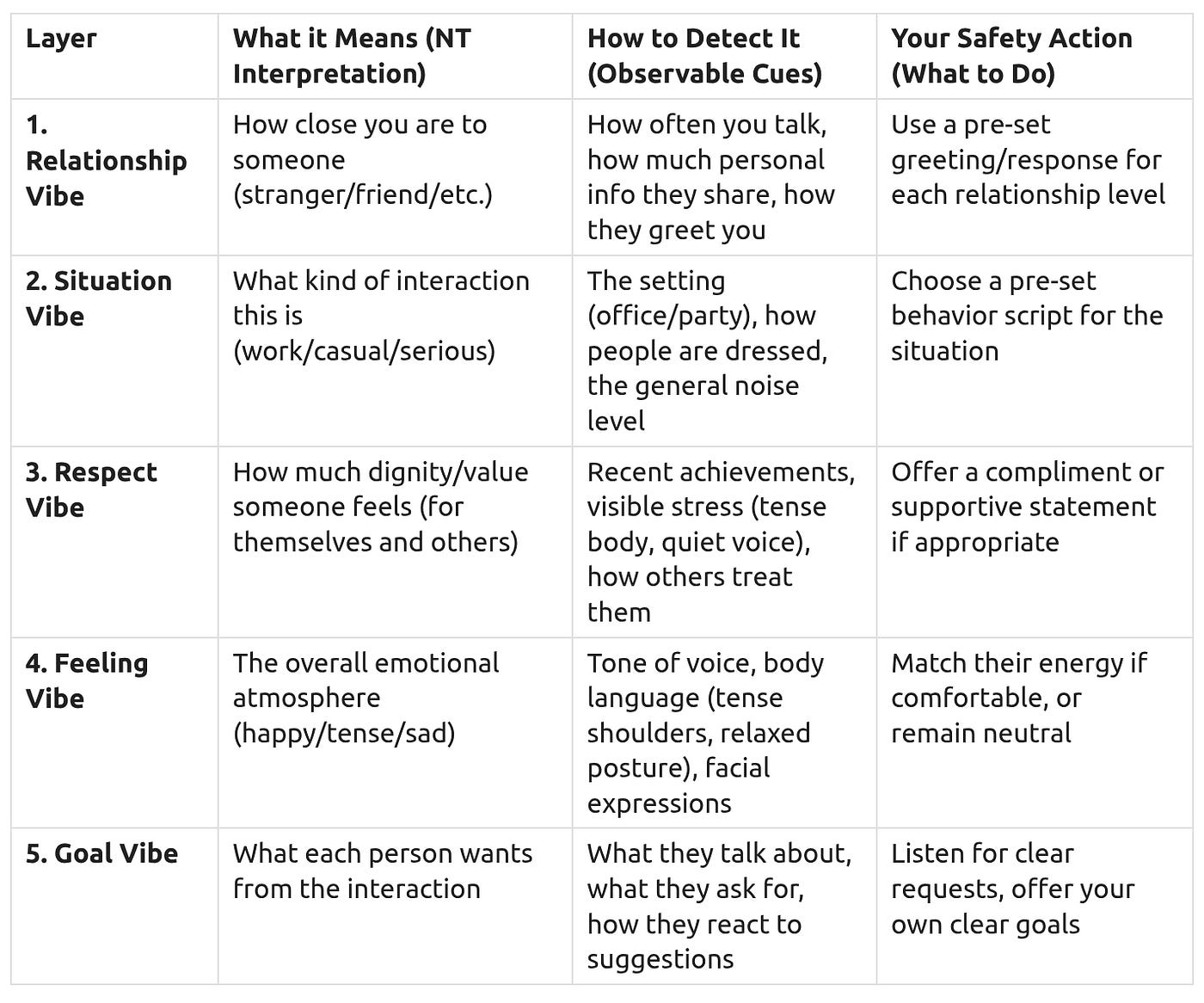
Warning Sign: If you miss any of these vibe layers, it can lead to confusion and emotional discomfort. Your direct response might be seen as ignoring the unspoken feelings in the room, which can feel jarring to others.
1.2 Social Handshakes: Simple Scripts for Connection
Function: These are simple, reliable social scripts designed to initiate and maintain basic social connections. Think of them as ”Social Handshakes”— small, predictable exchanges that signal your willingness to engage without requiring complex emotional interpretation. The goal is to reduce anxiety and prevent feeling blindsided by unexpected social cues.
High-Reliability Social Handshakes (Observable NT Inputs and Your Safe Responses):
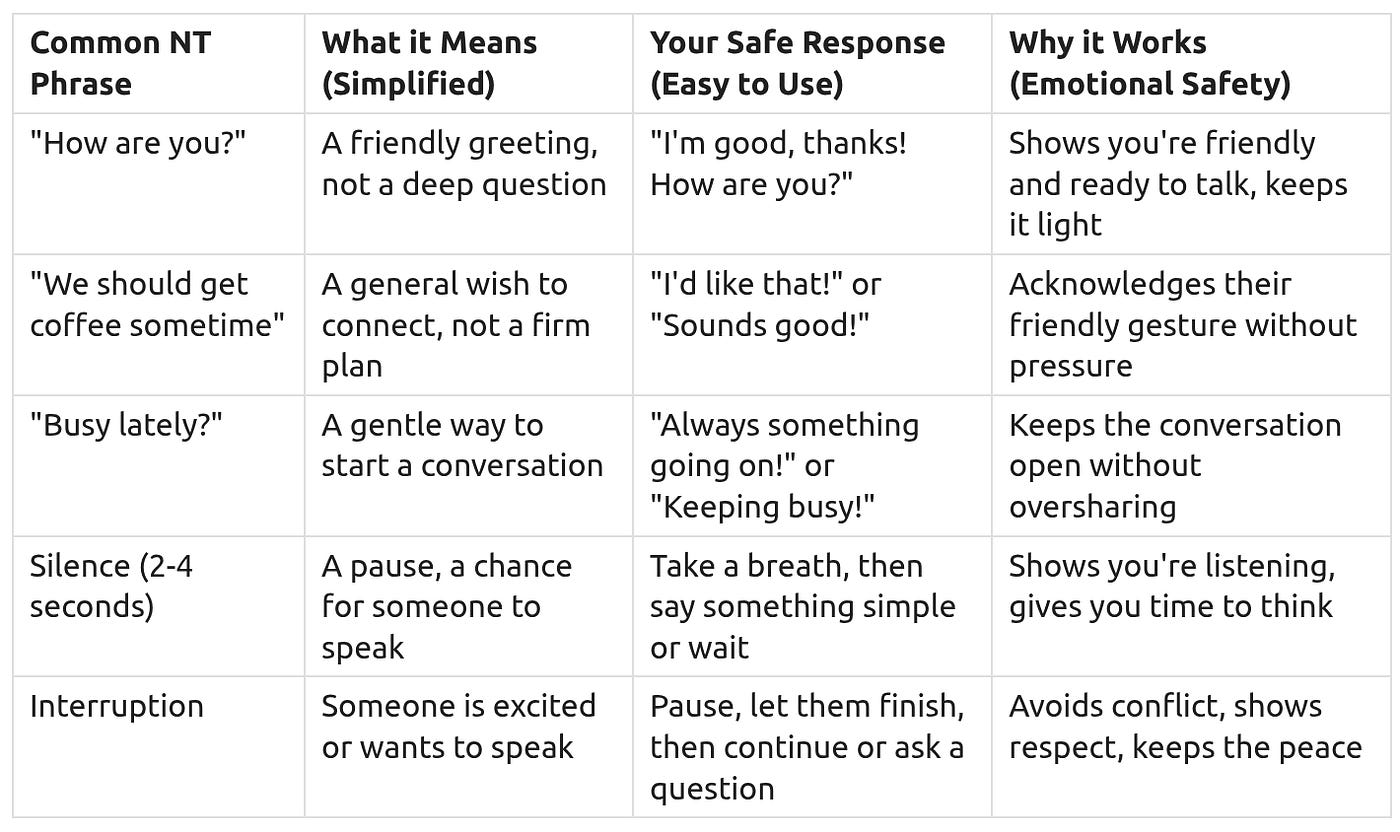
Your Strategy for Social Handshakes:
Keep it Simple: Use these scripts as they are. Don’t try to change them or add too much detail, especially at first.
Practice: The more you use these scripts, the more natural they will feel. Practice in low-stress situations.
Focus on Reciprocity: The goal is to show you’re engaged. A simple “How are you?” back is often enough.
Timing is Key: Try to respond within 0.5–2.0 seconds. This shows you’re paying attention and helps avoid awkward pauses.
1.3 Reading the Room: Simple Signals for Social Cues
Neurotypical people constantly send out small, often unconscious, signals about how they are feeling and what they expect. For someone with a thick dissociation layer, these can be hard to notice. This section focuses on simple, observable signals that can help you “read the room” and feel more secure.
Key Social Signals (Observable NT Behaviors and Your Safe Responses)
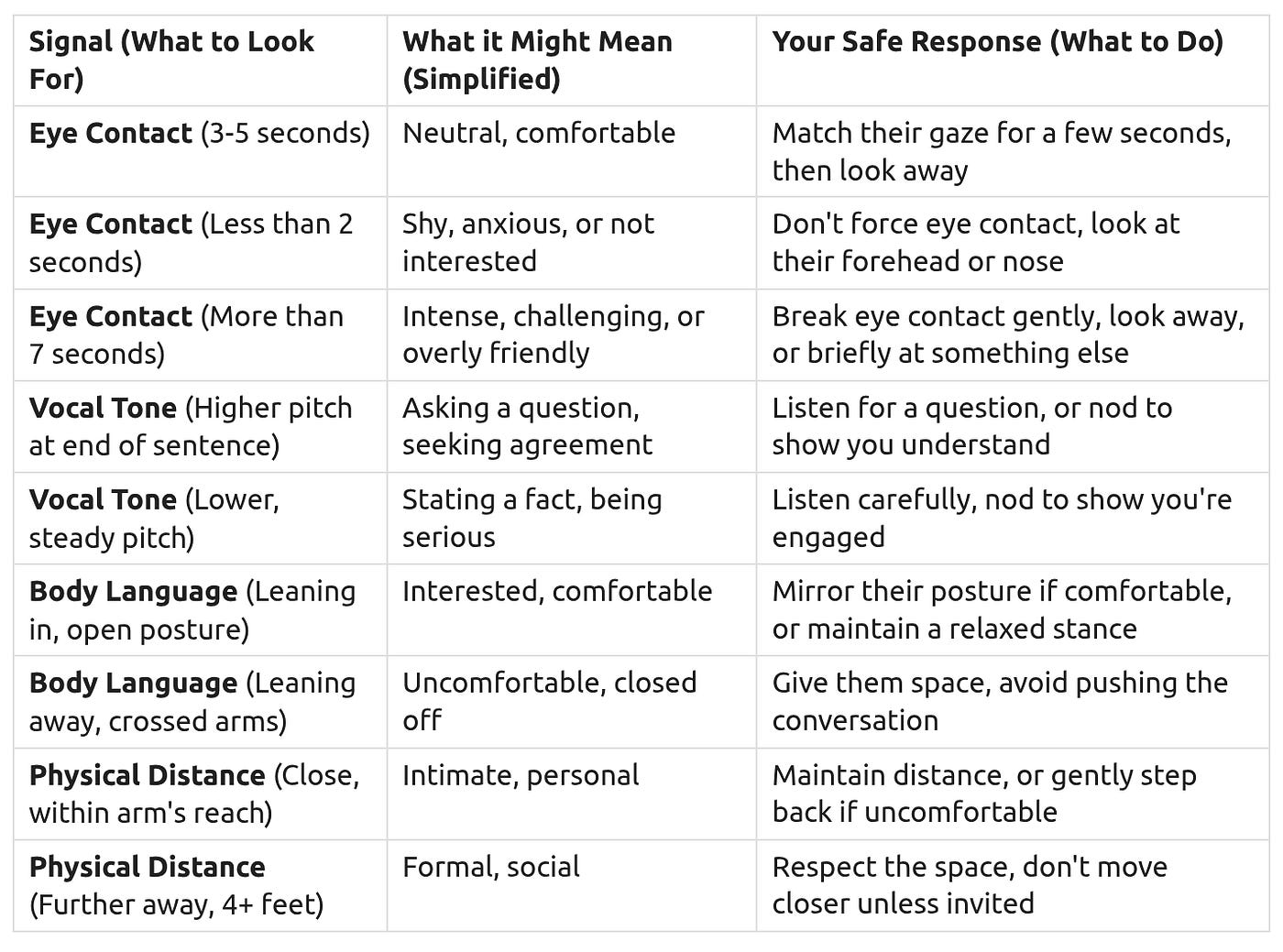
Your Strategy for Reading Signals:
Pick One Signal: Don’t try to notice everything at once. Choose one signal (like eye contact or body language) to focus on during an interaction.
Observe, Don’t Interpret: Just notice what they are doing, not why. Overthinking can lead to anxiety.
Adjust Slowly: Make small, gentle adjustments to your own behavior based on what you observe. You don’t need to be perfect.
It’s Not Your Fault: If you miss a signal, it’s okay. Social communication is complex, and everyone misses things sometimes.
1.4 Avoid Social “Shocks”: Managing Face-Threats
Neurotypical communication often prioritizes social comfort over direct truth. This means people might say things indirectly or avoid direct criticism to keep everyone feeling good. When you speak directly, it can sometimes feel like a “social shock” to others, even if you don’t mean it that way. This sections helps you avoid these shocks and protect your own emotional well-being.
Common Social “Shocks” and How to Avoid Them:
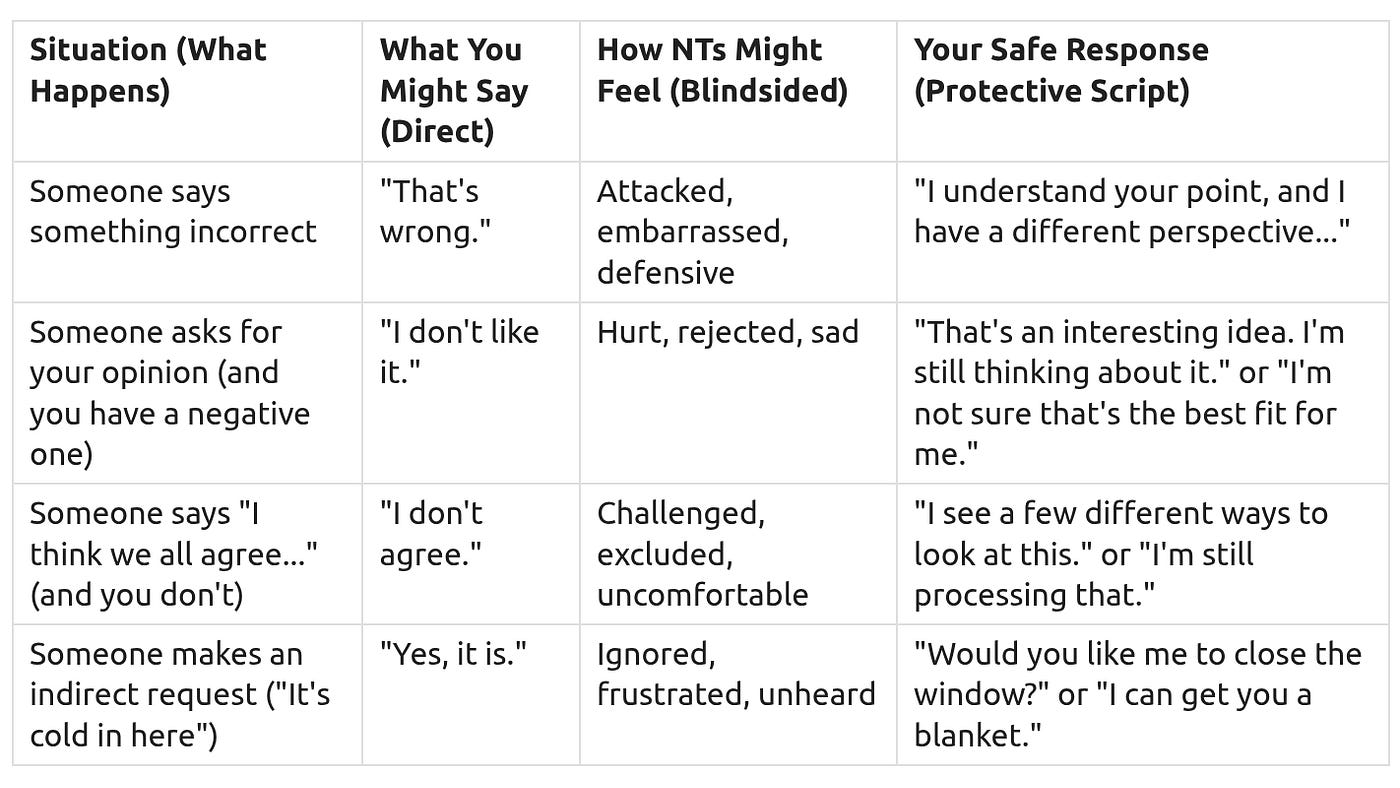
Your “Social Shock Absorber” Protocol (Use Before Difficult Conversations):
Acknowledge First: Start by showing you heard them: “I hear what you’re saying…” or “That’s an interesting thought…”
Use a Soft Transition: Instead of “but,” use “and” or “However, I also think…” This softens the impact.
Share Your Perspective Gently: State your point clearly but calmly. Focus on “I” statements: “I feel…” or “…what do you think?”
Remember: Using this protocol is like putting on a helmet before riding a bike. It protects you and others from unexpected bumps. It takes more energy, so use it when the conversation feels important or potentially difficult.
Module 2: When Things Go Wrong: Your Emotional First Aid Kit
2.1 Feeling Blindsided: Understanding Misunderstandings
Sometimes, despite your best efforts, social interactions can still go wrong. You might feel confused, hurt, or blindsided. This isn’t a failure on your part; it’s a misunderstanding between different communication styles. This section helps you understand common misunderstandings and gives you tools for emotional first aid.
Common Misunderstandings and Your Emotional First Aid:
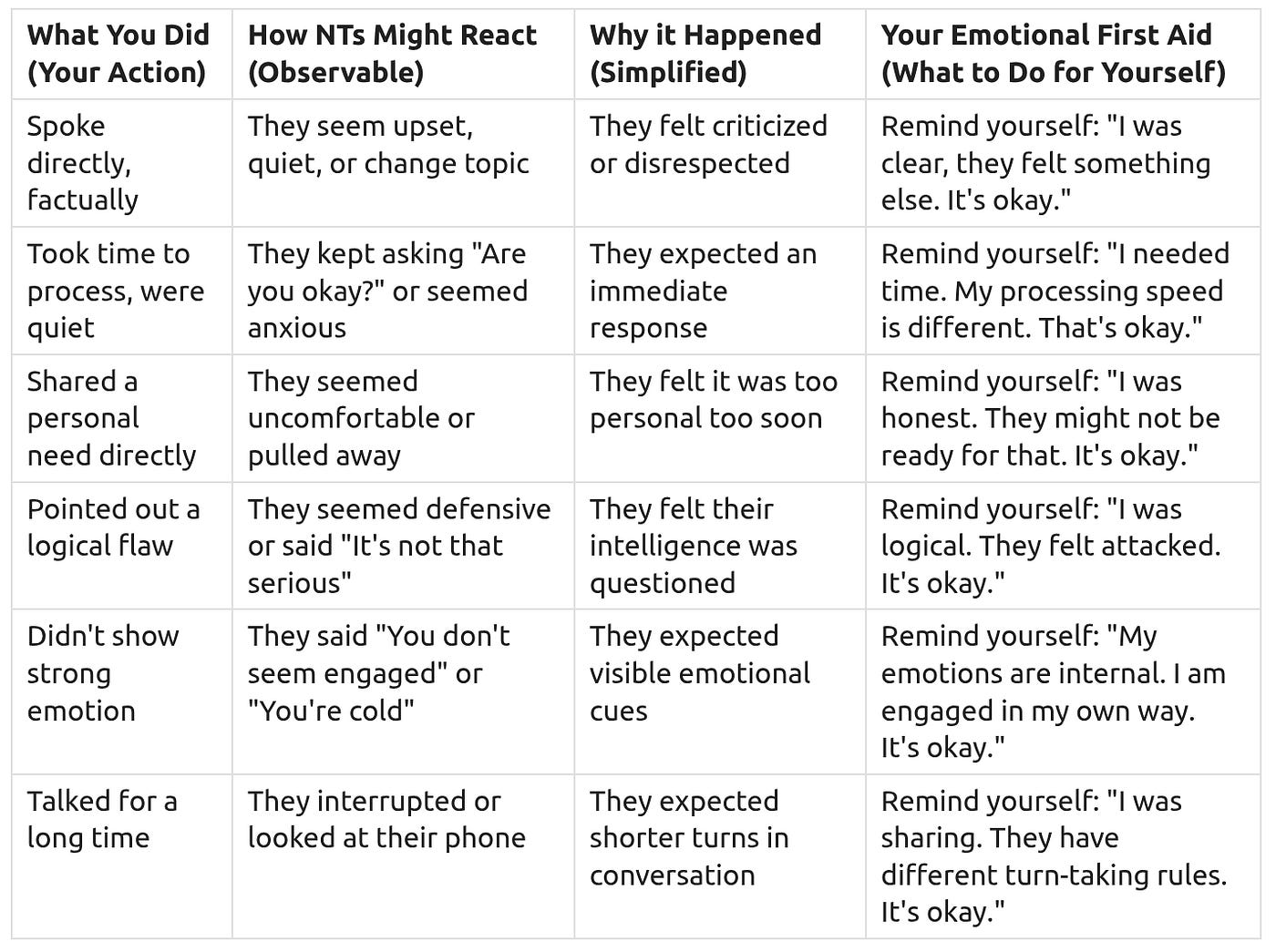
Your Emotional First Aid Kit:
Acknowledge Your Feelings: It’s okay to feel hurt, confused, or discouraged. Your feelings are valid.
Take a Break: Step away from the situation if you can. Go to a quiet place, listen to music, or do something calming.
Self-Compassion: Remind yourself that you are doing your best. Social rules are complex, and it’s a learning process.
Reframe: Instead of “I failed,” think “I learned something about NT communication.” Every interaction is data.
Connect with Safe People: Talk to someone who understands you and can offer support.
2.2 Recovering from Social Overwhelm: Your Recharge Protocols
Social interactions, especially confusing ones, can be draining. It’s vital to have Recharge Protocols to prevent burnout and maintain your emotional energy. Think of these as essential steps to reset your system after a challenging social experience.
Immediate Exit (0–5 minutes):
Goal: Get to a safe, quiet space quickly.
Action: Physically leave the situation. Go to another room, step outside, or end the call. Reduce sensory input (e.g., dim lights, wear headphones).
Feeling: A sense of relief, physical relaxation.Sensory Reset (5–30 minutes):
Goal: Calm your nervous system.
Action: Engage in a calming sensory activity: listen to soothing music, stim, cuddle a pet, drink a warm beverage. Avoid new information or demanding tasks.
Feeling: “False calm” — a temporary sense of peace.Emotional Processing (30–90 minutes):
Goal: Allow yourself to feel and release emotions.
Action: Let your thoughts and feelings flow without judgment. You might cry, journal, or talk to a trusted friend. This is where the “storm clears.”
Feeling: A sense of release, clarity, and emotional balance.Gentle Re-engagement (90+ minutes):
Goal: Slowly return to your regular activities.
Action: Engage in a preferred, low-stress activity. Reconnect with a hobby, read a book, or plan a simple, enjoyable task. Assess if you’re ready for more social interaction.
Feeling: Curiosity returning, readiness to re-engage with the world.
Warning: Skipping these recovery phases is like running a car without oil. It leads to cumulative stress, increased sensitivity, and eventually, complete shutdown. Prioritize your recharge time.
Module 3: Your Social Toolkit: Simple Scripts and Strategies
3.1 Phatic Wrappers: Easy Conversation Starters and Closers
Function: These are simple, pre-made phrases that help you start and end conversations smoothly. They are like ”Phatic Wrappers” — they wrap around your main message to make it more socially acceptable and less abrupt. They help you connect without deep emotional effort.
Your Phatic Wrapper Library:
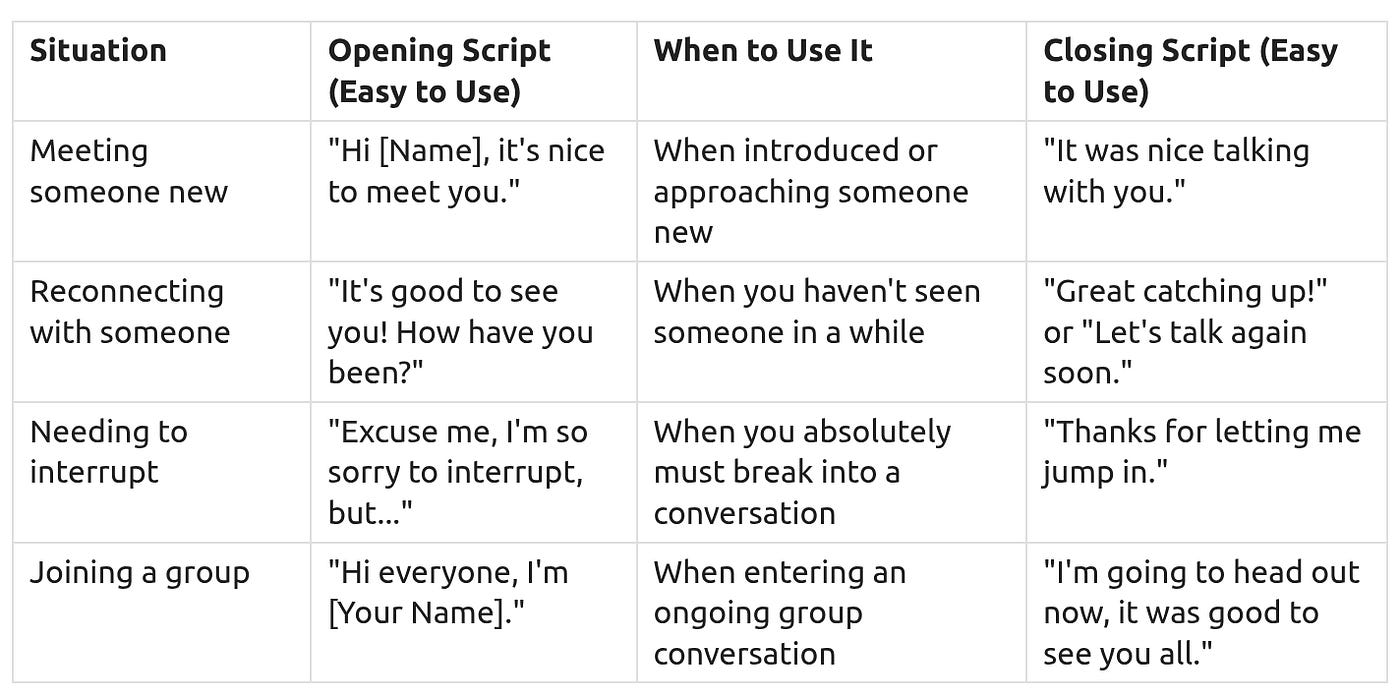
Your Strategy for Phatic Wrappers:
Memorize a Few: Pick 2–3 scripts for common situations and practice them until they feel natural.
Use Them as a Default: When in doubt, use a wrapper. It’s better to be polite than silent.
Don’t Overthink: These are functional tools, not deep emotional expressions. Just use them.
3.2 Face-Buffer Construction: Softening Difficult Messages
Sometimes you need to say something that might be difficult for others to hear. The Face-Buffer Protocol is like a cushion that softens the message, protecting both their feelings and your own. It helps prevent social shocks and discouragement.
Your Face-Buffer Toolkit:
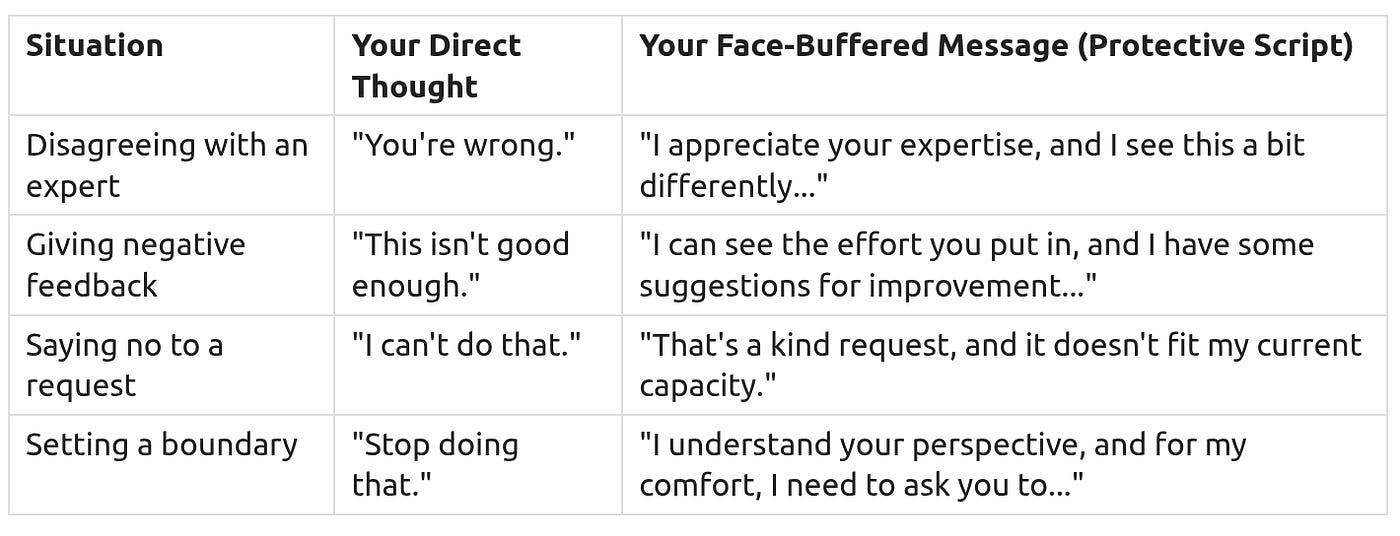
How to Use Your Face-Buffer:
Start with Validations: Always begin by acknowledging their point or effort. This creates a safe space.
Use “And,” Not “But”: “But” often cancels out the validation. “And” connects your point gently.
State Your Message Calmly: Deliver your actual message clearly, but without strong emotion.
End with Openness: Offer a way forward or ask for their thoughts: “…so we can find a solution” or “…what are your thoughts?”
Remember: This is a powerful tool for maintaining social harmony and protecting your emotional energy. Use it when you anticipate a potentially difficult conversation.
3.3 Strategic Ambiguity: When Not to Be Too Clear
Sometimes, being too direct or too clear can cause more problems than it solves in social situations. Strategic Ambiguity means using phrases that are a little vague, allowing for flexibility and avoiding unnecessary conflict. This is a tool for emotional self-preservation.
When to Use Strategic Ambiguity (and What to Say):
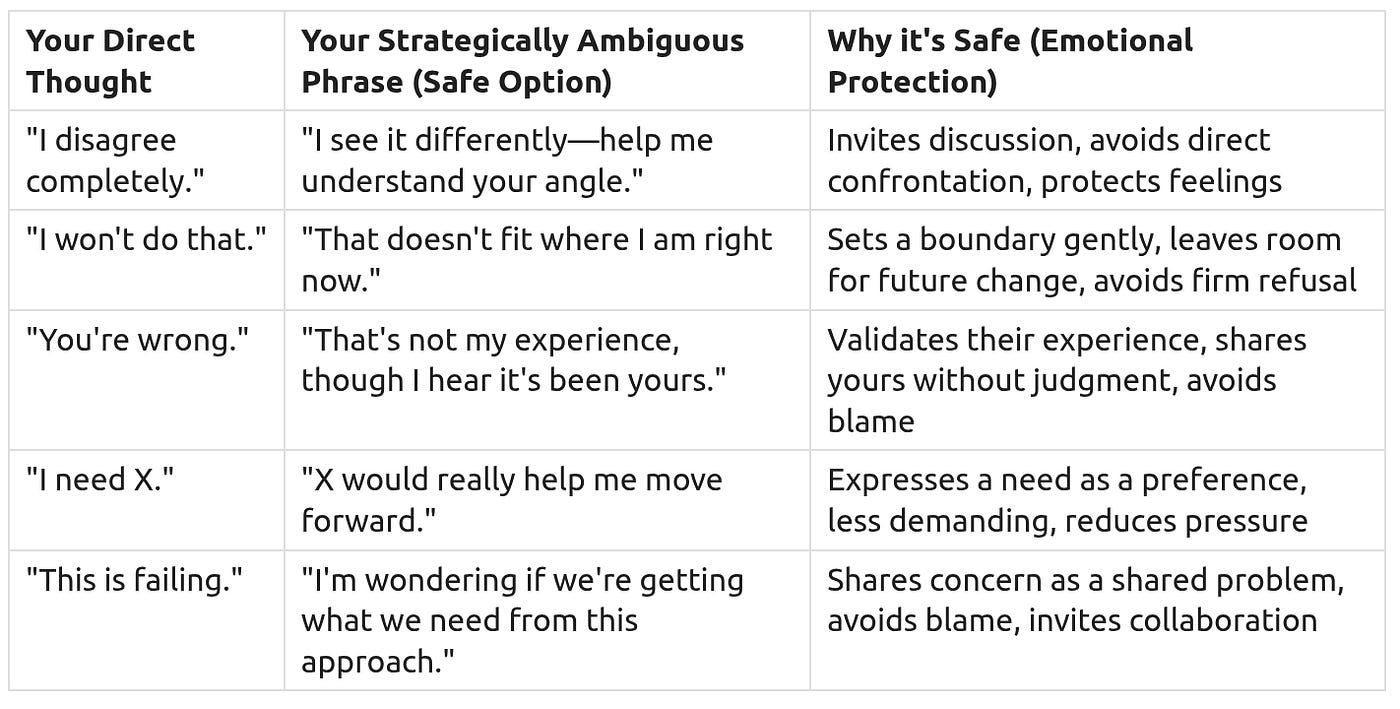
Energy Saving Tip: Being ambiguous can sometimes save you emotional energy by avoiding arguments or difficult explanations. Use it when the precise truth isn’t worth the potential social costs.
3.4 Social Metronome: Finding Your Rhythm
Social interactions have a rhythm, like music. Matching this rhythm can make conversations feel smoother and less stressful. This **Social Metronome** helps you find and match the pace of neurotypical conversations, reducing the chance of feeling out of sync.
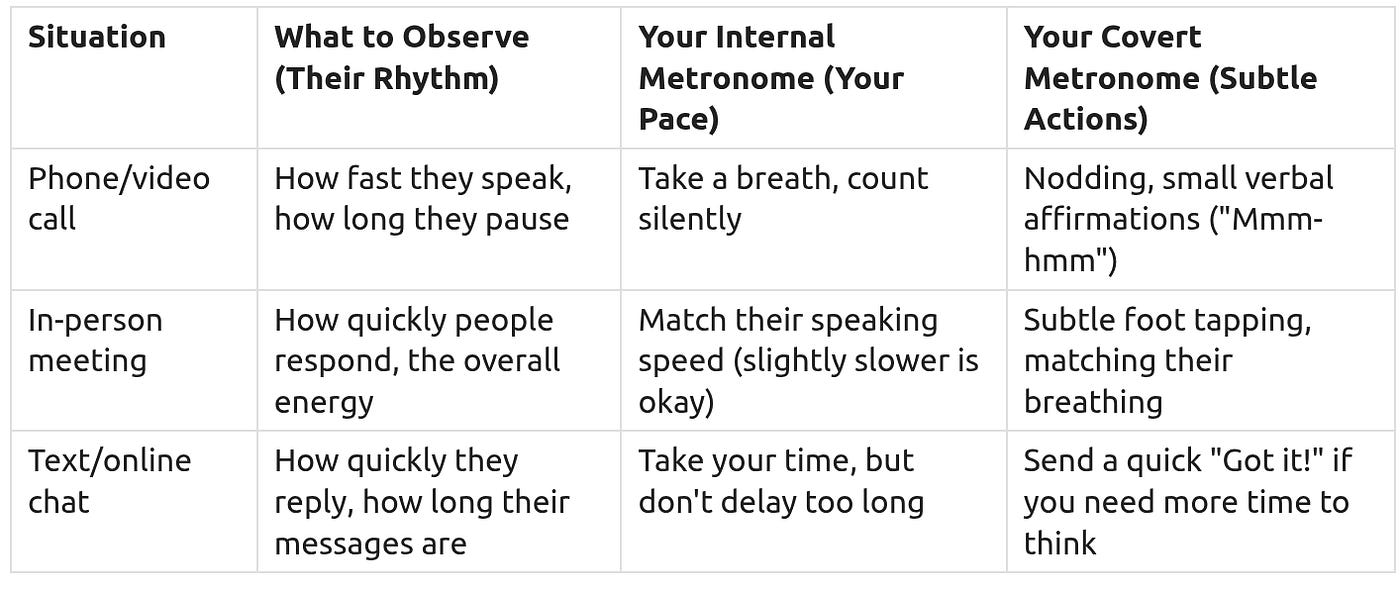
Important: Your metronome should be subtle. The goal is to feel more comfortable and in sync, not to mimic perfectly. A slight delay in your response can even signal thoughtfulness.
Module 4: Building Your Sanctuary: Environmental Scaffolding
4.1 Choosing Your Social Partners: Identifying Safe People
Not all social interactions are equally draining. Some people are easier to be around than others. This section helps you identify Safe People — those who are more understanding and less likely to cause social shocks. Prioritize your energy for these interactions.
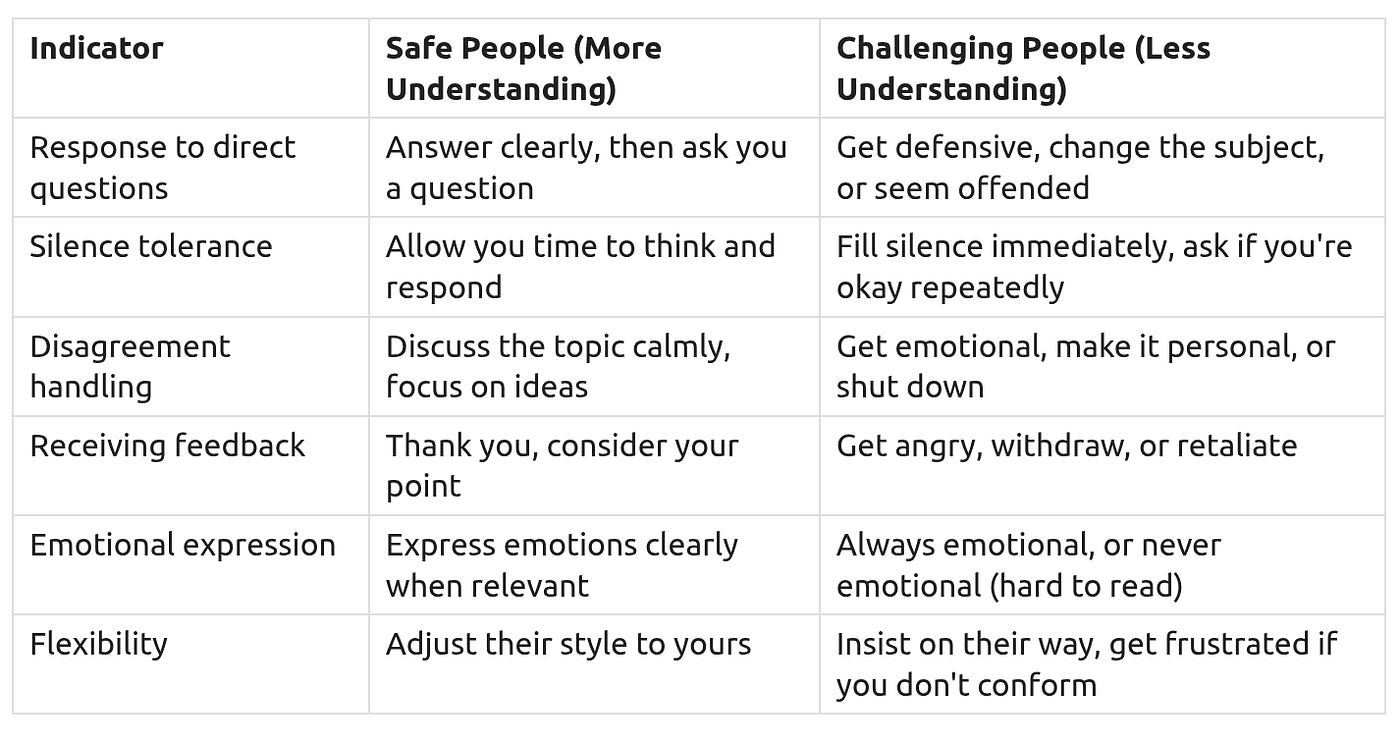
Your Strategy: Spend more time and energy with Safe People. With Challenging People, use your Social Shock Absorber and Phatic Wrappers, and be prepared to use your Recharge Protocols afterward.
4.2 Managing Your Energy: Social Mode Selection
Just like a phone has different modes (e.g., airplane mode, low power mode), you can choose different Social Modes to manage your energy. This helps prevent burnout and discouragement.
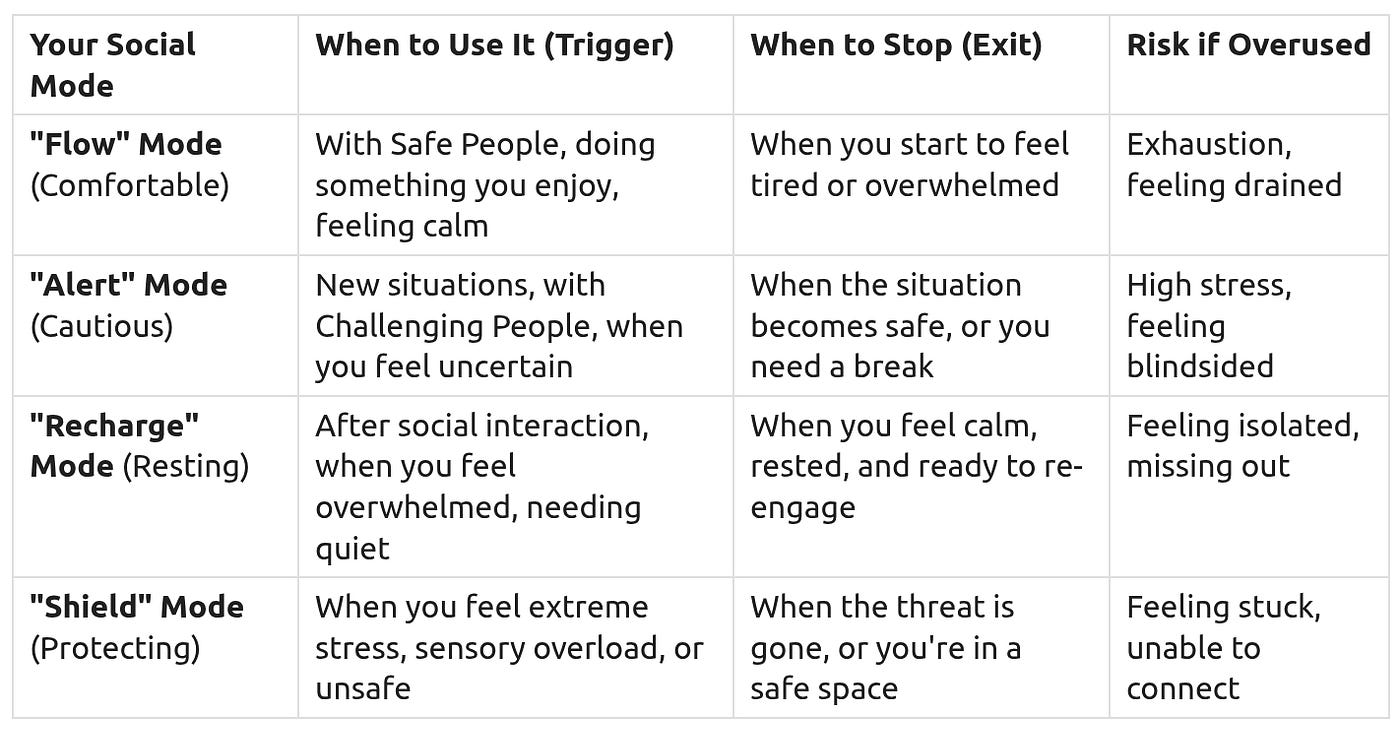
Before an Interaction: Ask yourself: “What mode do I need to be in for this?” and “How much energy do I have?” It’s okay to choose a lower-energy mode or even to avoid an interaction if you need to.
4.3 Your Personal Recharge Station: Recovery Protocols
After social interactions, especially difficult ones, it’s essential to have a Personal Recharge Station — a set of activities that help you recover and feel like yourself again. Skipping these steps leads to cumulative stress and makes future interactions harder.
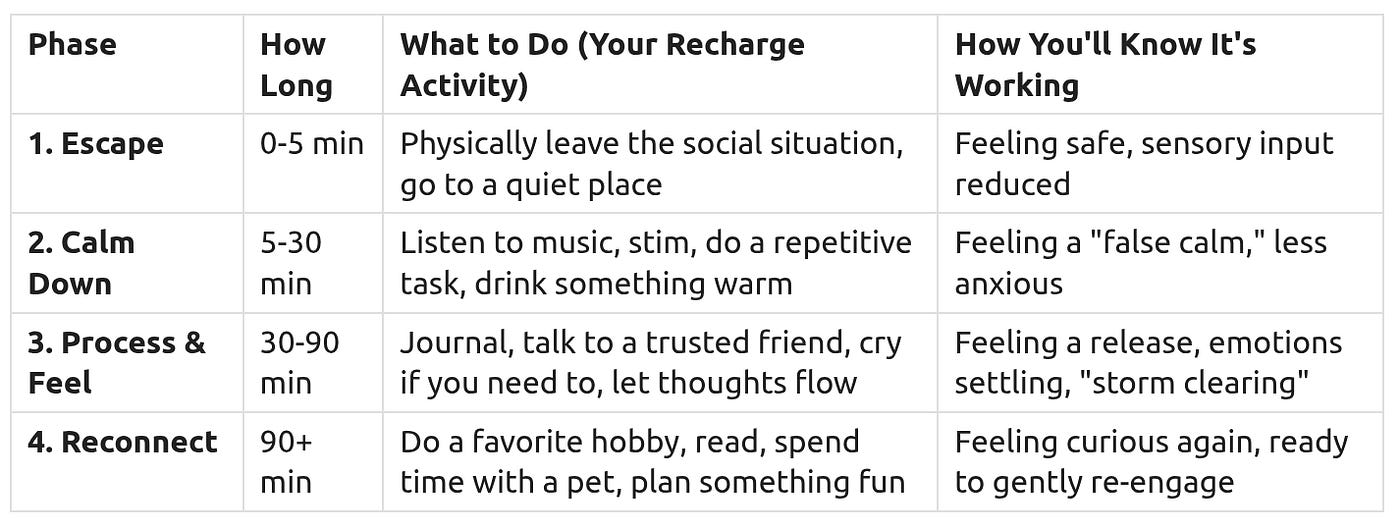
Remember: Your Recharge Station is not a luxury; it’s a necessity. Protect this time fiercely. It’s how you stay strong and resilient.
Module 5: Being a Social Navigator: Helping Others Understand
5.1 Your Role as a Bridge: Explaining Differences
Sometimes, you might find yourself in a position to help neurotypical people understand autistic communication, or vice versa. This is a special role, like being a Social Navigator or a Bridge-Builder. It takes a lot of energy, so use it wisely and only when you feel safe and able.
When to Be a Bridge-Builder
When both people genuinely want to understand each other.
When the misunderstanding is about how people communicate, not what they believe.
When you feel safe and have enough emotional energy.
How to Be a Bridge-Builder (Your Steps):
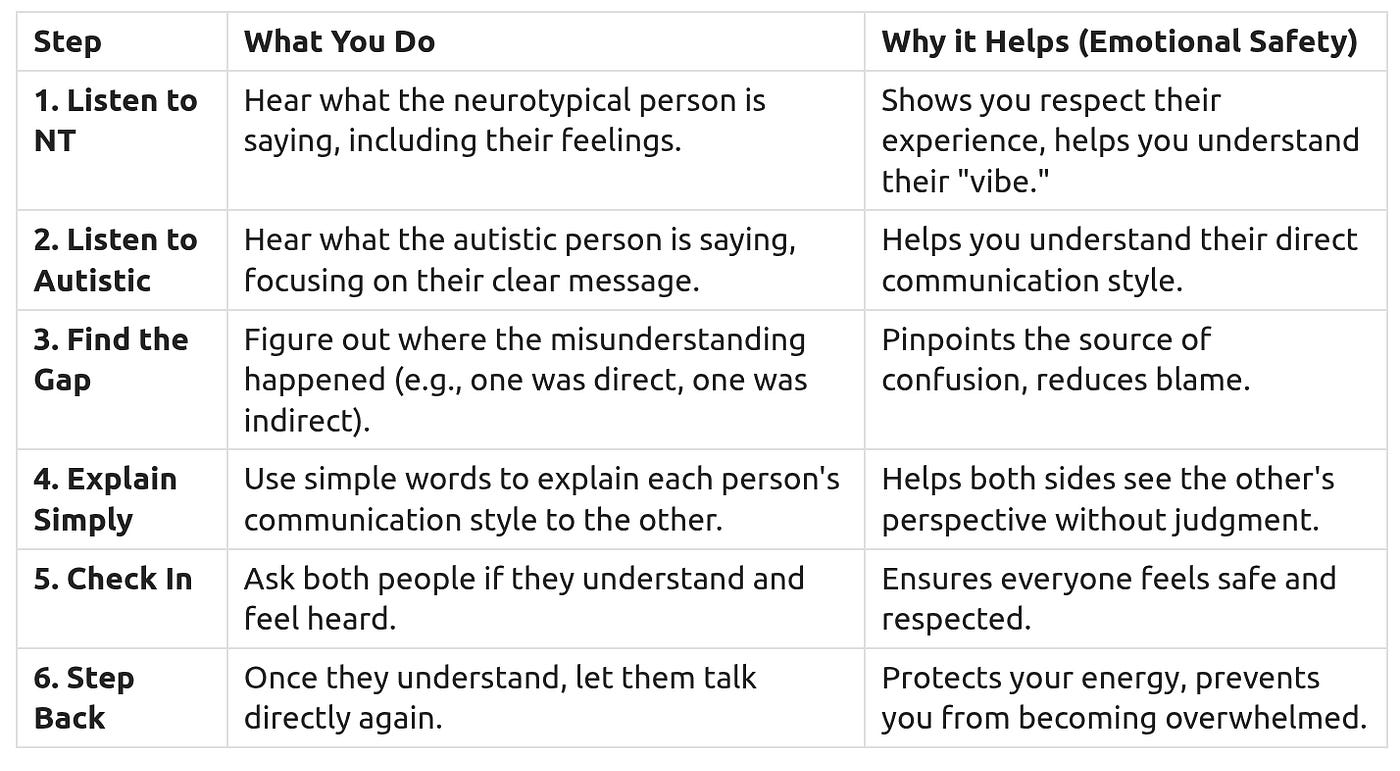
Energy Cost: This role is very demanding. Only take it on when you have a full emotional battery and feel very safe. It’s okay to say no.
5.2 Protecting Your Boundaries: Anti-Enmeshment Protocols
Sometimes, when you’re good at navigating social situations, people might rely on you too much, or you might start to feel like you have to be someone you’re not. These Anti-Enmeshment Protocols help you protect your boundaries and stay true to yourself.
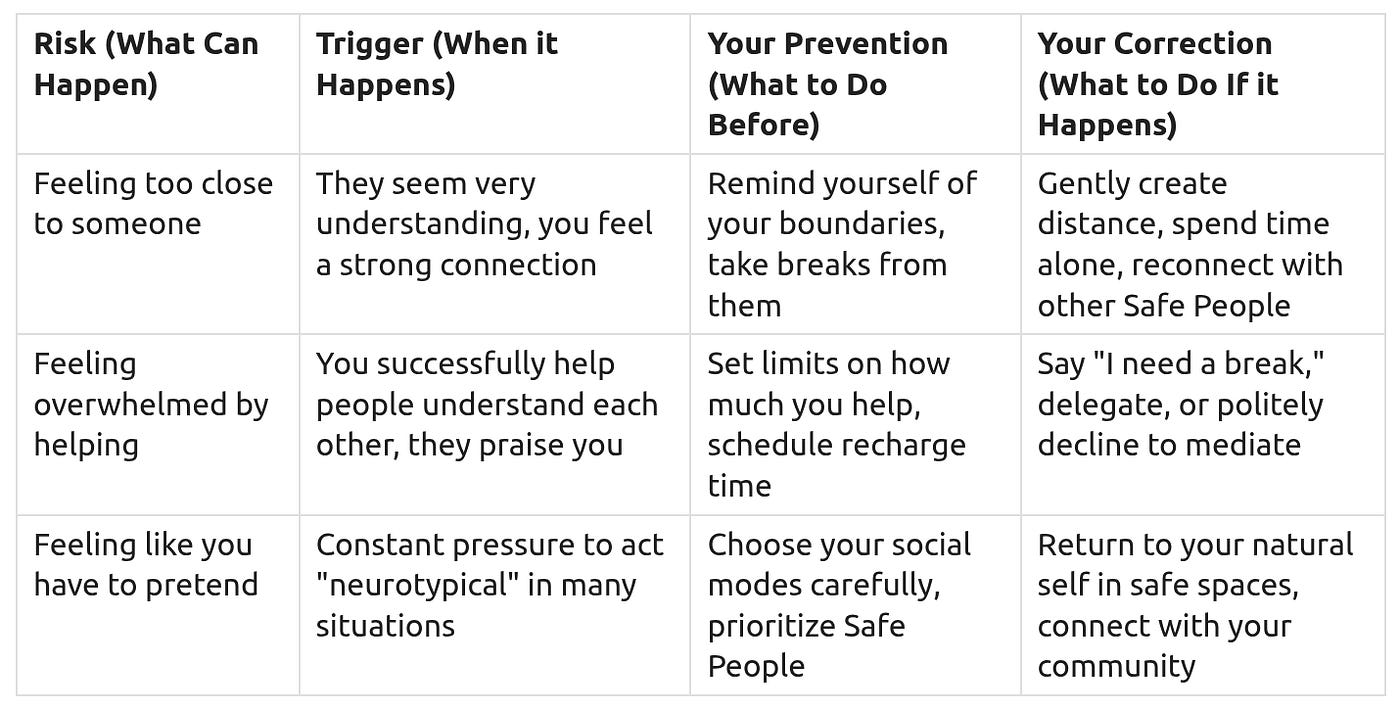
Remember: Your boundaries are your personal shield. Protecting them helps you maintain your emotional well-being and prevents discouragement. It’s okay to be yourself.